The Official Site of the
BETHESDA BIG TRAIN
Summer Collegiate Baseball

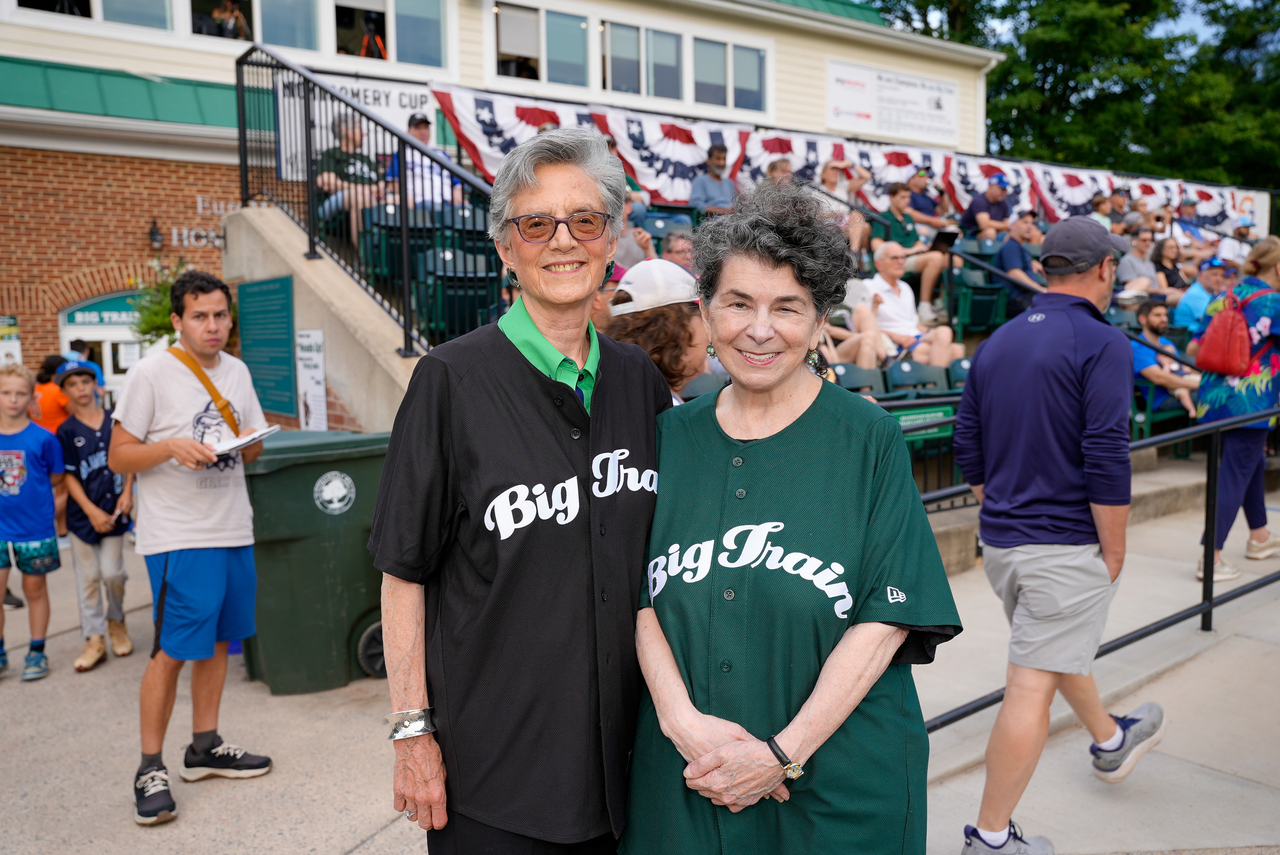
Community Hero Dr. Dorothy Canter during the game against the Olney Cropdusters at Shirley Povich Field on Sunday, July 12, 2026 in Rockville, Maryland. (Photo by Matthew Lewyn/Bethesda Community Base Ball Club)
BETHESDA, Md — The Bethesda Big Train celebrated Jewish Baseball Heritage Night with a sold-out crowd, hosting an important part of the Bethesda community for a game against the Olney Cropdusters.
The evening began with a bobblehead trading event for Big Train fans and players. Over 100 bobbleheads ranging from the Washington Nationals, Baltimore Orioles, minor league baseball teams, celebrity chef Bryan Voltaggio and even former President Barack Obama were available to exchange.
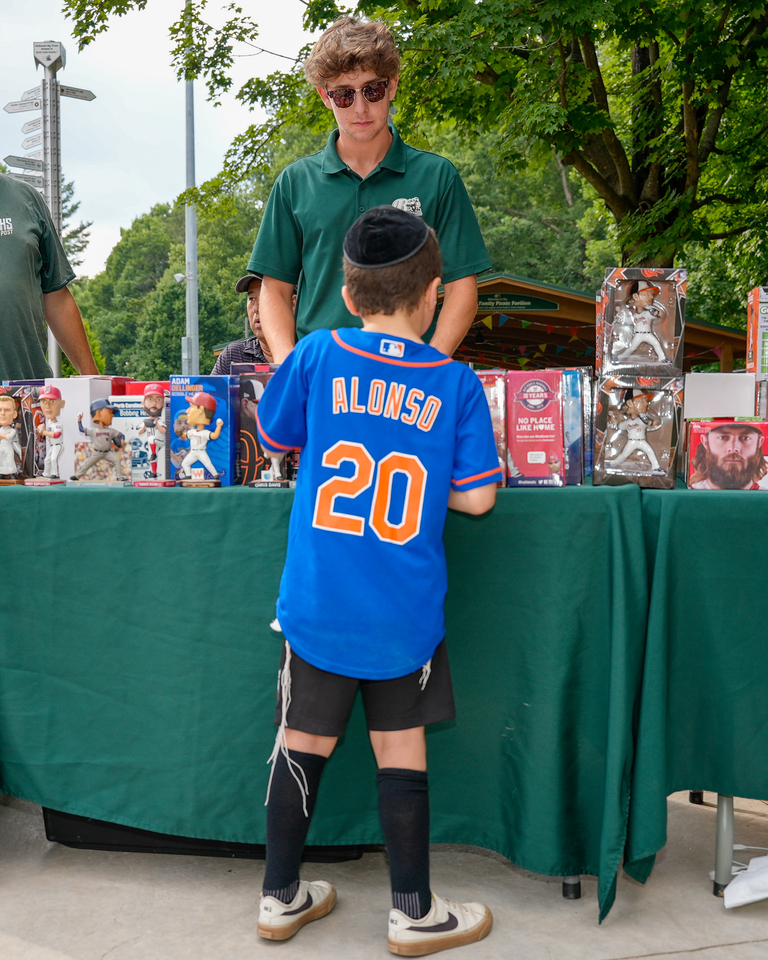
Bobblehead Trading Night by Matthew Lewyn
For Jewish Baseball Heritage Night, the Big Train played game night music courtesy of OySongs, who also performed the national anthem, and sold kosher food options courtesy of PLNT Burger.
Bethesda fans had the opportunity to meet members of the Greater Washington Jewish Sports Hall of Fame Barry Weinberg and Adam Gladstone, the Chief Operating Officer and Director of Baseball Operations for Israel Baseball Americas.
Launched in 2024, Israel Baseball Americas is a nonprofit organization whose mission is to “provide support to the Israel national team and baseball development in Israel and use baseball as a vehicle to spread Jewish pride,” according to their website.
Since 2017, the Israeli national team has qualified for three World Baseball Classic championships, three European Baseball Championships and the Tokyo Olympics.
“I think that’s a testament that our product continues to get better,” Gladstone said. “More players want to play for us [and] we have such a great time with our guys.”
The Israeli baseball team has a special connection with the Big Train — both teams faced off in 2021 at Shirley Povich Field in preparation for Team Israel’s inaugural appearance in the Tokyo Olympics. After a hard-fought contest, Team Israel came away with the 8-7 win, and went on to finish fifth in the Olympics.
“I thought [playing the Big Train] was a no-brainer, because of the job that Bruce [Adams] and Sal Colangelo do,” Gladstone said. “It wasn’t just about coming to Bethesda and playing a game, it was about playing the right team so we could be challenged before we played in the Olympics.”
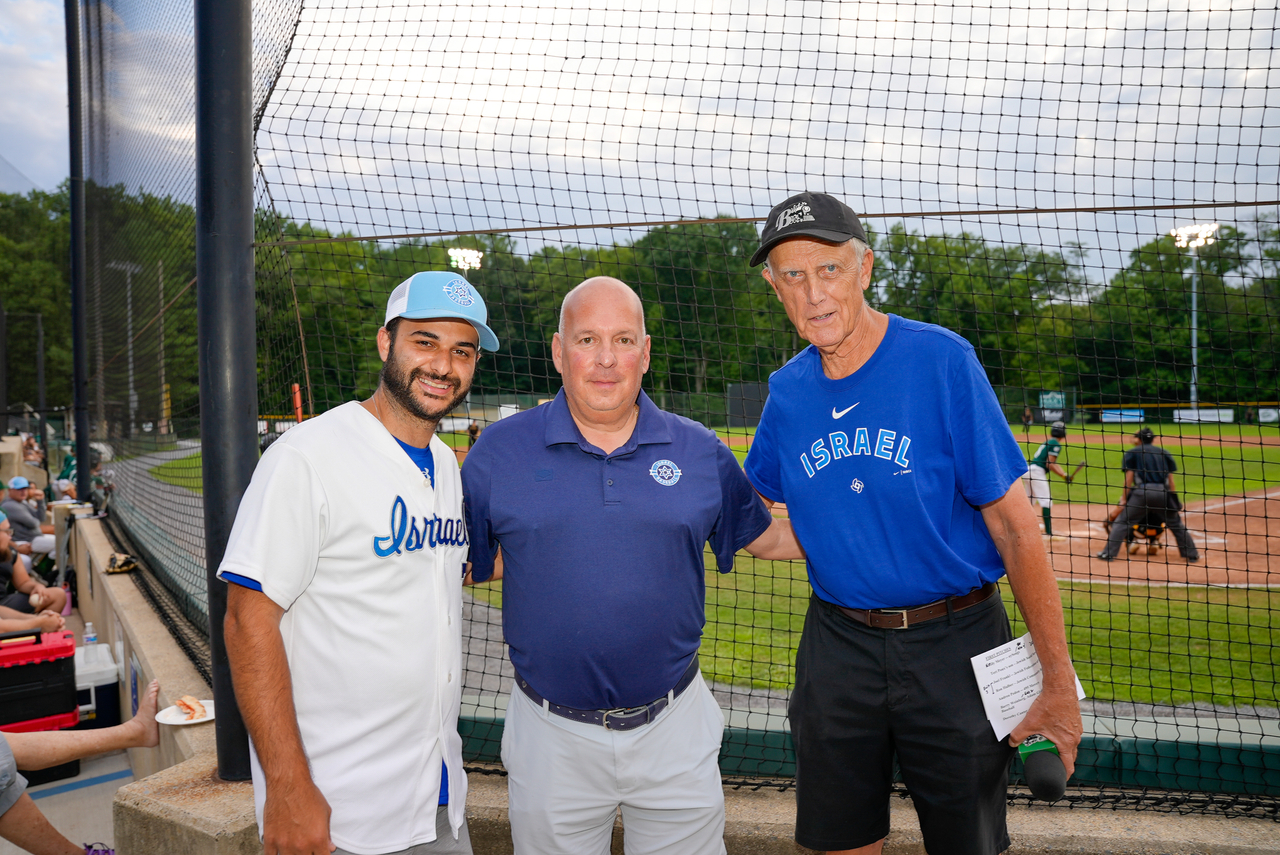
Tal Erel, Adam Gladstone and Bruce Adams by Matthew Lewyn
Tal Erel, an Israeli baseball national team player and Lynn University graduate, featured for the Israeli national team during their campaigns for the 2019, 2021 and 2023 European Championships, and starred as an Olympian in the Tokyo Olympics.
“I’ve always considered myself two things — first, Israeli, and second, a baseball player — so bringing both worlds to the same field has been quite remarkable,” Erel said.
Erel was also amazed at the turnout on Jewish Baseball Heritage Night as a sold-out crowd cheered on the Big Train.
“I think that’s what the Jewish community really represents,” Erel said. “You don’t have to be the biggest voice in the world, but you have a community that’s out there.”
To cap off an eventful evening at Shirley Povich Field, the Big Train honored another Community Hero this season. Dr. Dorothy Canter is the President of the Rosenwald National Historic Park Campaign, which is a campaign to create a National Historic Park dedicated to Julius Rosenwald.
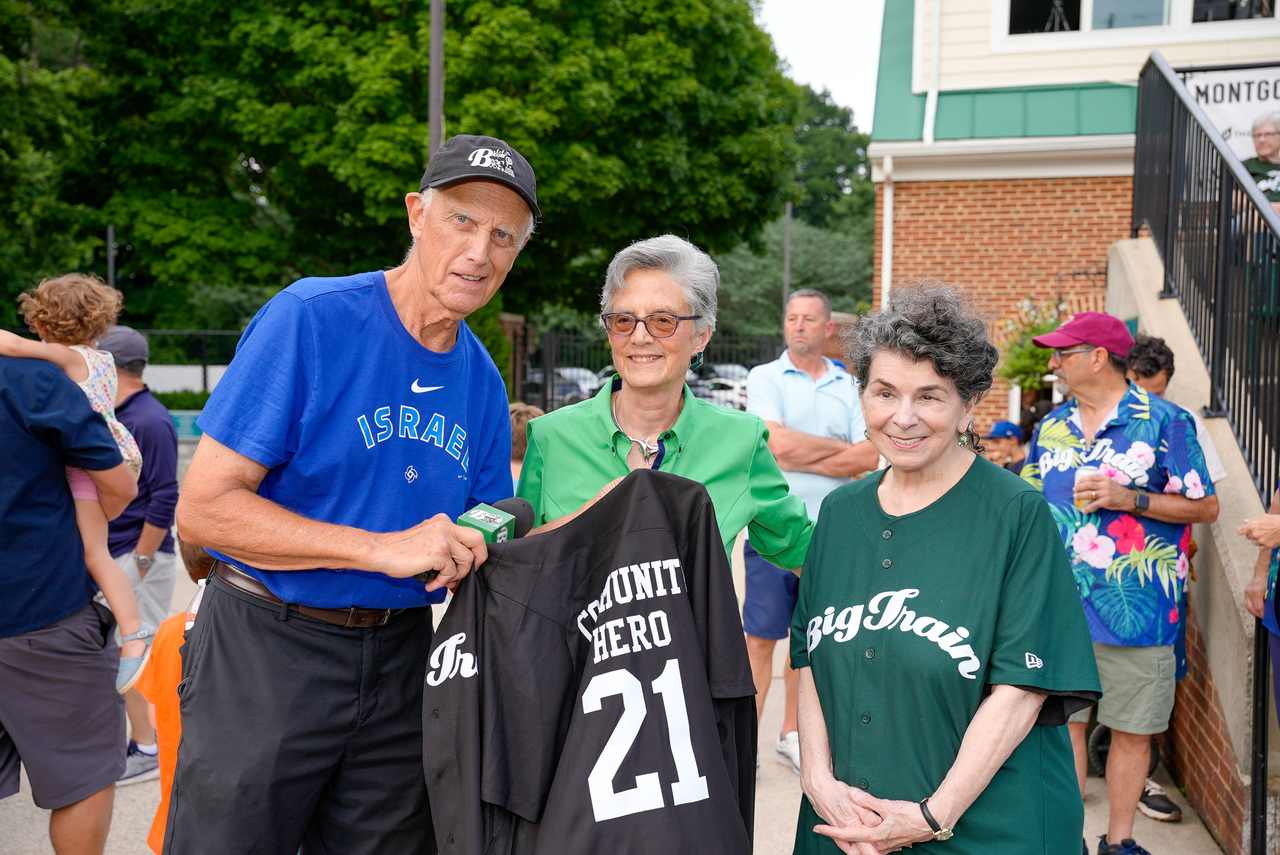
Community Hero Dr. Dorothy Canter by Matthew Lewn
Rosenwald was a Jewish-American philanthropist who funded the construction of YMCAs for African-American communities in 24 different cities in 1911. Between 1912 and 1932, Rosenwald partnered with Booker T. Washington to help build over 5,000 schools in 15 Southern states.
Several key figures in the Civil Rights Movement were graduates of the Rosenwald Schools, including Congressman John Lewis, poet Maya Angelou and activist singer Nina Simone. Figures like Langston Hughes, Marian Anderson, Ralph Bunche and Jacob Lawrence were also recipients of the Julius Rosenwald Fund, which started in 1917 to support African-American communities.
Canter’s involvement in the foundation of the Rosenwald Campaign came purely by chance.
“My husband and I wanted to see a movie in 2015, and we couldn’t agree on a movie, so we weren’t gonna do it,” Canter said. “I just happened to see a review of a documentary, Rosenwald, and I said to my husband ‘have you heard of Julius Rosenwald?’ and he hadn’t, so we went.”
Thanks to Canter’s previous involvement on the Board of the National Parks Conservation Association, following their movie night, Canter decided to pursue a campaign to dedicate a National Park to Julius Rosenwald.
Canter cites an impactful quote from Rosenwald as part of her motivation to create the National Historical Park. “I do not see how America can go forward if part of its people are left behind,” Rosenwald once said.
Once proclaimed as a National Historic Park, the Julius Rosenwald and Rosenwald Schools Park will be the first National Park to commemorate the contributions of a Jewish-American, address early African-American and Jewish-American relations and provide insights into philanthropy in the United States, according to their website.
“We live in a very divisive time,” Canter said. “This is the story of partnerships of very different people from different cultures that could work together and move the nation forward.”
Anyone interested in learning more and supporting the Rosenwald Campaign can visit www.rosenwaldpark.org.
